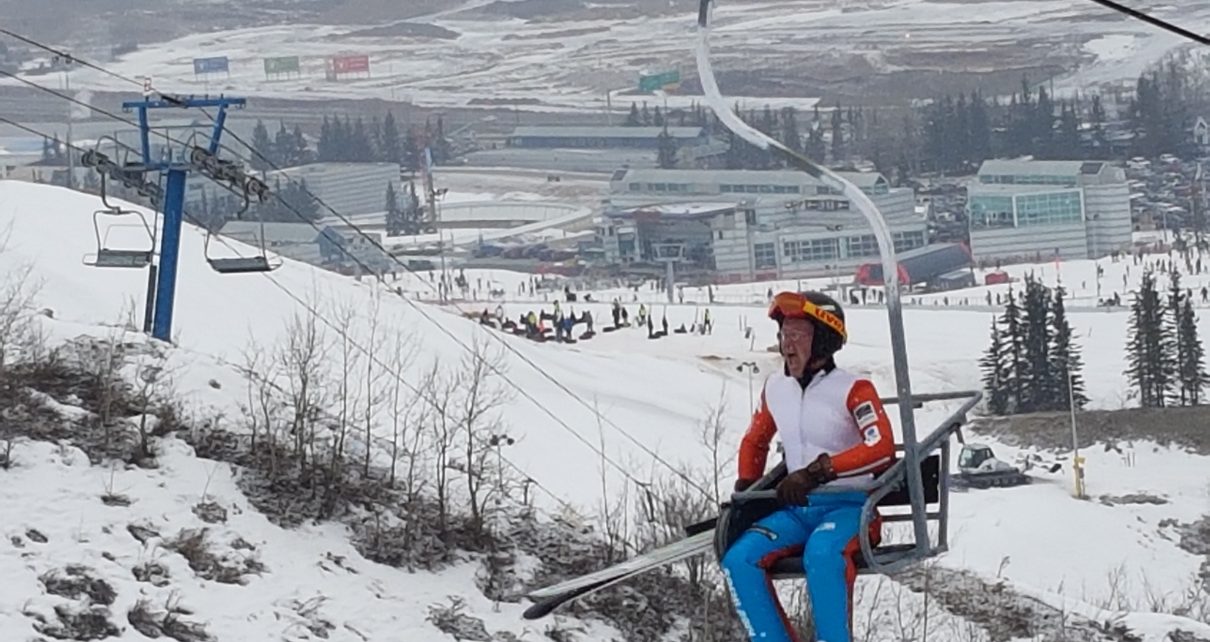
In 1988, Olympic Ski Jumping experienced a shift in reality when Cheltenham-born Michael Edwards broke British records.
A small boy from Gloucestershire had a dream of competing in the Olympics, and it didn’t matter what sport he competed in or where he placed, he just wanted to say he was an Olympian.
Eddie ‘the Eagle’ Edwards had only 22 months of preparation before stepping into one of the biggest sporting stages.
Calgary was his goal, but first he had to qualify for the Games, which meant travelling to multiple countries with limited funding.
“I asked the British Ski Federation, ‘what would I need to do to qualify or to have my name put forward for qualification for Calgary?'” Edwards told BBC Sport’s Greatest Underdogs podcast.
“They said, ‘You would have to jump 50 metres in a World Cup competition’. I did my very first World Cup competition 10 months after I first put on power jumping skis, and I’d actually only done two jumps off a 120-metre ski jump.”
At the 1987 World Championships, Edwards jumped almost 70 metres, and despite finishing last, he still qualified.
At only 22-years-old, Edwards jumped the 70m and 90m, breaking British records and his own personal bests, with his biggest jump being 71 metres.
Almost 38 years later, his legacy remains a key focus at the Winter Olympics, inspiring generations to push for their dreams.
Cheltenham local, Tony Roberts, remembers watching Eddie the Eagle’s first Olympics; “I do remember, vividly. And that’s saying something, because even at the time it felt like you were watching a moment that didn’t quite fit the usual Olympic script.
“Seeing Eddie jump in Calgary was surreal. Ski jumping was this ultra-serious, alpine-dominated discipline, and suddenly there was an Englishman — an Englishman — standing at the top of the ramp, thick glasses, homemade gear, no real funding, no expectations… except his own. That alone stopped you in your tracks.”
After jumping for the first time at the Games, Roberts described the feeling from the crowd: “The crowd’s reaction said everything. They weren’t laughing at him – they were cheering for him. That doesn’t happen by accident. It happens when people recognise authenticity, guts, and joy in sport.
“Nearly 38 years on, I don’t remember the distances as clearly as I remember the feeling: that sense that sport isn’t always about winning – sometimes it’s about showing up where no one like you has ever been before and jumping anyway, and Eddie did exactly that.”
Although Edwards didn’t change ski jumping technically, he definitely had an influence on other athletes and jumpers.
Roberts said: “Yes, Eddie had an influence on ski jumpers by reminding them, and the sport, that at its core, ski jumping is about standing at the top of something terrifying and choosing to go anyway.
“Eddie’s legacy in Cheltenham isn’t about ski jumping. It’s about owning your ambition, no matter how unlikely it looks from the outside. He proved that you don’t need the right background, the right look, or the right approval – you just need the courage to keep saying yes to the jump.”
“That’s a legacy you can’t measure in metres.”