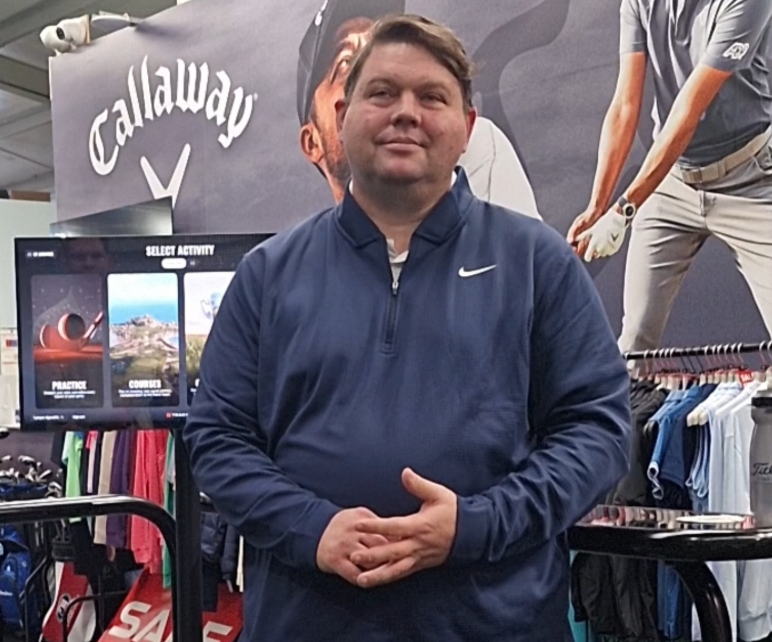
Hourly pricing, county-standard players, a new membership scheme and a growing winter crowd. Golf Qube in Cheltenham says the appeal of indoor golf has grown, and PGA professional Matt Evans expects it to keep growing as the clocks go back and the courses get wetter.
Matt, who works at the indoor fitting and lesson facility, says Golf Qube has been quiet at times, but that last winter showed where the demand is. “We had a lot of very good players last winter,” he said. Golf Qube charges by the hour rather than by the bucket of balls, and Matt believes that has made the difference for serious golfers. A typical driving range, he says, costs around £12 for roughly half an hour, while an hour at Golf Qube costs £15, long enough to put in proper work on wedges. “A lot of good county players and other good players come here to work on their games,” he said.
That opening tells you the shape of the story. What it doesn’t capture is how varied the people coming through the door are.
During the day, Matt says, the bays fill up with older golfers, usually between 10am and 12:30pm, who find a full round of walking harder than they used to. “They still want to turn their shoulders and swing. An old guy in his 80s can still have a swing and not walk the four miles round the golf course and can play 18 holes at Wentworth on the simulator without worrying about the walk.”
The seasonal pattern is clear to him. Dark evenings and cold winds push people off the course, and Matt believes the sport is heading towards a winter-and-summer split. “Your golf course is dark at 4 o’clock, and no one wants to play golf then, do they?” he said. “I’d never expect people to come off the golf course in the summer, because that’s why we play golf.” The summer was quieter for the business, helped by the lovely weather and the World Cup, but Matt expects another busy winter. “Why stand on a cold, wet driving range outside when you can get the same thing inside here?” he asked.
Golf Qube is not trying to be a night out, even though it has a VIP simulator with more than 2,000 courses loaded, which Matt says would suit a group of friends with a few drinks. “We’re more of a serious golfer type of place,” he said, pointing to The Golf Rooms in town as the more social option. The venue held its first club night recently, with players paying £5 to enter a competition, and has launched a membership scheme.
Technology is the other big draw. The simulators track swing path and club face data, which younger golfers in particular like to check, and Matt says players on tour work in much the same way, with a launch monitor or iPad beside them. “The numbers don’t lie. I’m more of an old-fashioned teacher, using analogue techniques reading the ball flight with my own eyes, but indoors the machine can tell you so much more than I can see. You see a lot of the young lads will look at the screen before they even watch the ball.” For complete beginners he keeps things simple, putting them on a basic driving range screen because “you don’t want to be going too deep too early”. He believes the average golfer can get this kind of data for very little.
The most common fault he sees is the slice. “That’s what 99% of amateurs do, because they don’t get their hips out of the way, they cut across the ball,” comparing it to a footballer kicking across the ball.
Next to the simulators is a fitting bay, which is the other big part of what Golf Qube does. Matt compared it to buying the right pair of shoes. “If I gave you a size nine and you are a size seven, it’s not going to fit you.” Lie angle, the angle between the shaft and the ground, affects where the clubface points, and it varies with a golfer’s height. A static fitting, using tape on the sole of the club and an impact board, has been the standard method since the mid-80s, but the simulator now measures lie and shaft angles directly. “I can just see the shaft angle already,” Matt said.
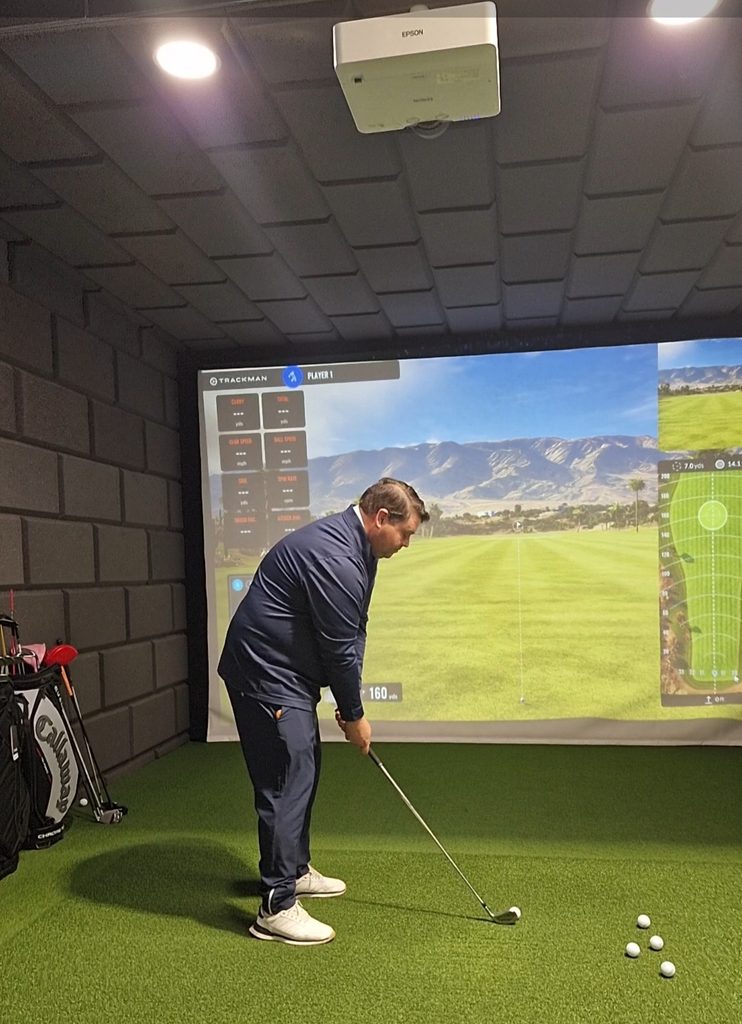
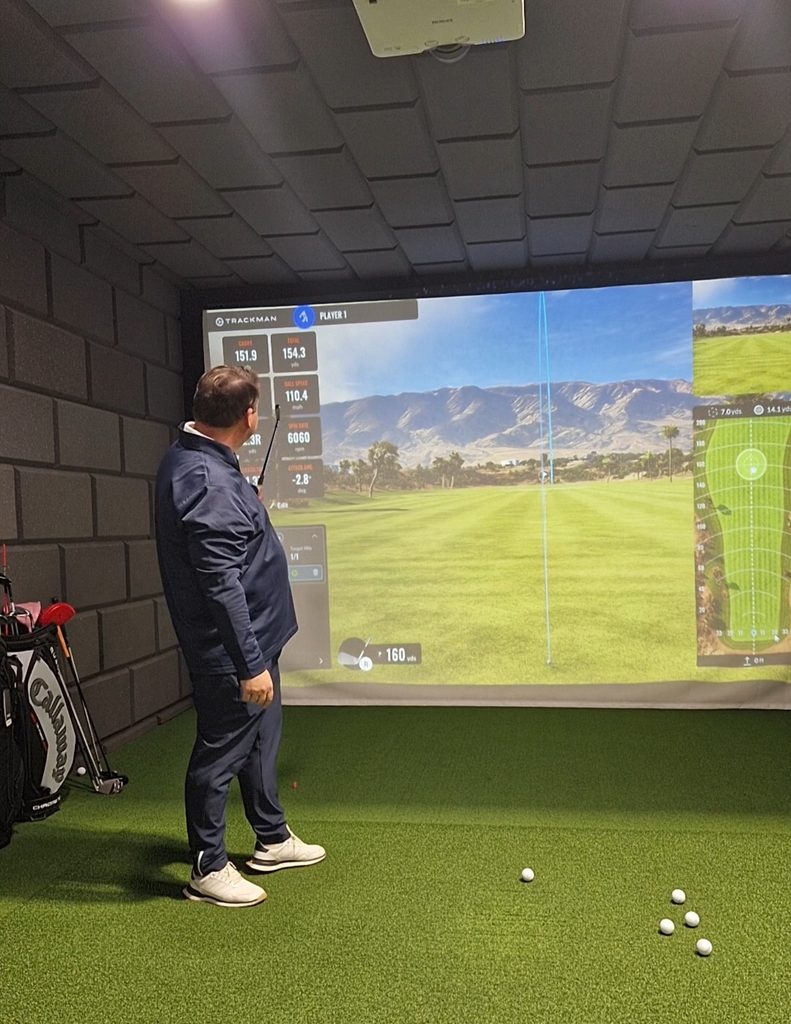
He also thinks the spotlight on the sport has helped: “Indoor golf has long been big in countries short on space, such as Japan and Thailand, but TGL, the indoor league fronted by Tiger Woods and Rory McIlroy, has put it in front of a wider audience which has probably pushed a few customers our way. The technology they need to do a full round like they do is a bit out of our league, but it’s certainly shown people that it can be done.”
For Cheltenham’s golfers, the message is clear. Golf’s off-season is getting shorter, and the next few months will show whether the simulator bays are a passing winter fix or a permanent part of the game.